The wall beside a home desk fills up fast with notes, and types of bulletin boards turn that wall into a working surface. A bulletin board holds reminders, plans, photos and lists where you can see them while you work, and the right board depends on what you pin to it and how often you change it. Cork boards take push pins, fabric boards take pins and look soft, magnetic boards hold magnets, glass boards wipe clean, and combo boards mix a pin surface with a writing surface. This guide explains each kind in plain words, so you can match the board to the wall and the work.
OfficeKitHQ earns a commission when you buy through links on this page, at no extra cost to you. As an Amazon Associate I earn from qualifying purchases. Affiliate disclosure.
The quick answer
Pick the surface by how you hang notes. If you pin paper with push pins, a cork board or a fabric board fits. If you would rather stick notes up with magnets, a magnetic board or a glass board fits. If you write lists as well as pinning paper, a combo board fits, and if the board hangs in a shared hall where many hands pass it, an enclosed board fits. Frame, mounting hardware and wall space matter as much as the surface, so check those before you buy.
Cork boards
A cork board is the classic pin board. The surface is natural cork, and push pins sink into it and hold paper, cards and photos in place. When you pull a pin out, the cork closes around the hole, so the board keeps a neat look through many changes of notes. Cork suits a desk wall where the notes change often, since pinning and unpinning takes no effort and leaves the paper unmarked. A cork board with a wood frame suits a home office, while a plain cork sheet suits a wall where the board itself should stay out of the way. Cork does not hold magnets, so if your notes hang from magnets, look at a magnetic board instead. Cork also shows pin holes over time in the spots you use most, so move pins around the surface rather than always using the same corner.
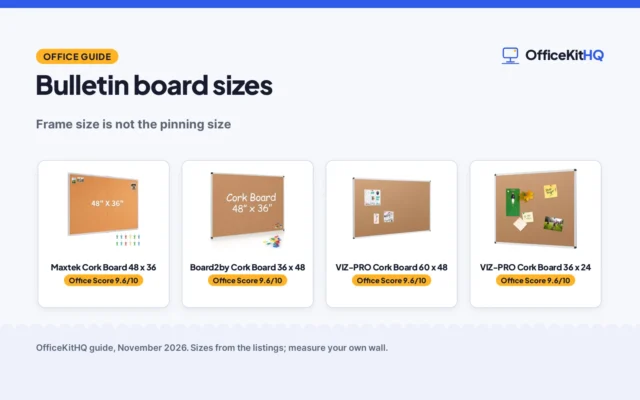
Cork boards come framed and frameless. A framed board hangs like a picture and the frame protects the cork edge from knocks. A frameless board sits flat on the wall and suits a modern desk area. When you shop, look at the frame material and the mounting hardware in the box.
Fabric and felt boards
A fabric board is a pin board dressed in cloth. Under the cloth sits a pin-friendly core, so push pins hold just as they do on cork, while the surface looks soft and quiet. Fabric boards suit a home office where the board is always in view, and they suit a bedroom desk or a study corner where a cork surface would look rough. The cloth also hides pin holes better than bare cork, so the board keeps a tidy look through many changes.
Fabric boards need a little care. The cloth can mark if you press a pin through the same spot again and again, so spread pins across the surface. A fabric board does not hold magnets, and it does not take markers, so if you write lists as well as pinning paper, a combo board fits better. Some fabric boards come with a wood frame, and some come frameless with a thin edge. Check the mounting hardware before you buy, since a fabric board can be heavier than a bare cork board of the same size, and the wall mounts must suit the weight.
Magnetic boards
A magnetic board holds notes with magnets instead of pins. The surface is a steel sheet, often painted white so it doubles as a dry-erase board, and magnets stick to it and hold paper without holes. That suits notes you move often, since a magnet lifts off and sticks back on without marking the paper. Magnetic boards suit a desk wall where the notes change through the day, and they suit a family kitchen wall where lists and reminders move around. A magnetic board also works as a writing surface when the surface is dry-erase, so you can write a list beside the pinned notes.
Magnets vary in strength, and a weak magnet slips down the board under a thick stack of paper. Check the magnets that come in the box, and keep a few strong magnets for heavier paper. A magnetic board does not take push pins, so if your habit is pinning, a cork or fabric board fits better. Some magnetic boards come framed in wood or aluminium, and some come as a plain steel sheet. A framed board suits a home office, while a plain sheet suits a wall where you want the board to blend in. See the best bulletin boards for an office for more magnetic picks.
Glass boards
A glass board is a magnetic board with a glass surface. The glass wipes clean, resists stains and keeps a bright look in a modern office. Most glass boards are magnetic, so magnets hold notes to the glass, and dry-erase markers write on it and wipe off without ghosting. Glass suits a desk wall where you write lists every day and want the surface to stay clean, and it suits a meeting room where the board is always on show. A glass board does not take push pins, so paper hangs only from magnets, and a note with no magnet behind it falls.
Glass boards are heavier than cork or fabric boards, so the mounting hardware matters. Check that the wall mounts suit the weight and that the board comes with the brackets it needs. Glass boards come framed and frameless, and a frameless glass board suits a clean, modern desk area. Markers made for glass or dry-erase boards write best on glass, while a marker made for paper smears.
Combo boards
A combo board mixes a pin surface with a writing surface in a shared frame. The usual mix is cork beside a whiteboard, so you pin notes on the cork side and write lists on the whiteboard side. Some combo boards mix fabric with a whiteboard, and some mix a magnetic surface with a cork strip. A combo board suits a desk wall where you pin paper and write lists in the same place, and it suits a small office where a board must do the work of a pin board and a whiteboard together. See the best cork board and whiteboard combos for more combo picks.
When you shop for a combo board, check how the surface splits. A board with a wide pin area and a narrow writing area suits a wall of pinned notes, while a board with a wide writing area suits a wall of lists. Check the frame and the mounting hardware, since a combo board can be heavier than a plain pin board. A combo board does not suit a wall where you pin a lot of paper and never write, since the writing surface would sit unused, and a plain cork or fabric board would fit better there.
Enclosed boards
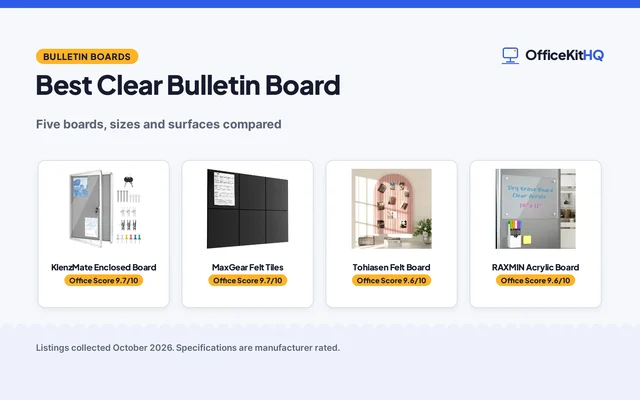
An enclosed board sits behind glass or clear plastic in a locked case. The case keeps notes safe from curious hands and from weather in a shared hall, while the glass lets people read the notes without touching them. Enclosed boards suit schools, offices and shared buildings where many people pass the board, and they suit a hall where notices must stay up for weeks. See the best bulletin boards for teachers for more enclosed picks.
An enclosed board takes pins on a cork or fabric surface inside the case, so the pin surface works just like an open board. The glass adds weight and depth, so the mounting hardware must suit a heavier board and a wall that can hold it. Enclosed boards do not suit a private desk wall, since the case and the lock add bulk and cost for no gain, and an open board would fit better there. Check the case depth before you buy, since a shallow case suits flat paper while a deep case suits thicker displays.
How to choose the best types of bulletin boards
Start with how you hang notes. Pins point to cork or fabric, magnets point to a magnetic or glass board, and markers point to a whiteboard or glass surface. Then think about who sees the board: a private desk wall suits an open board, while a shared hall suits an enclosed board. Then check the wall: measure the space, look at the mounting hardware, and make sure the fixings suit the wall material and the board weight.
| Type | Surface | Holds notes with | Suits |
|---|---|---|---|
| Cork | Natural cork | Push pins | Pinning notes and reminders |
| Fabric | Cloth over a pin board | Push pins | A softer look in a home office |
| Magnetic | Steel sheet | Magnets | Sticking notes up without pins |
| Glass | Tempered glass | Magnets and markers | A clean look with dry-erase notes |
| Combo | Cork plus a writing surface | Pins and markers | Notes and lists in a shared frame |
| Enclosed | Cork or fabric behind glass | Pins, behind a locked door | Shared halls and classrooms |
Frame and finish come last. A wood frame suits a warm home office, an aluminium frame suits a modern desk area, and a frameless board suits a wall where the board should stay out of the way. Check what comes in the box: mounting hardware, pins, magnets and markers vary from board to board, and a board that ships without fixings needs a separate trip to the hardware store. A board that matches your habit, your wall and your room will serve you for years.
FAQ
What is the best type of bulletin board for a home office?
It depends on how you hang notes. A cork board or a fabric board fits if you pin paper, a magnetic board fits if you use magnets, and a combo board fits if you pin paper and write lists in the same place.
Can you use magnets on a cork bulletin board?
No, cork takes push pins and does not hold magnets. If your notes hang from magnets, choose a magnetic board or a glass board instead.
What is the difference between a cork board and a fabric board?
A cork board shows a natural cork surface, while a fabric board covers a pin-friendly core in cloth, often felt. Each takes push pins, but the fabric board looks softer and hides pin holes better.
Do glass bulletin boards take pins?
No, glass does not take push pins. Glass boards hold notes with magnets and take dry-erase markers, so paper hangs only where a magnet holds it.
What is a combo bulletin board?
A combo board mixes a pin surface with a writing surface in a shared frame, usually cork beside a whiteboard. It suits a desk wall where you pin notes and write lists in the same place.
More for your workspace
See every Office Machines and Storage guide. Also see the best bulletin boards for a home office, the best bulletin boards for an office, the best cork bulletin boards and the best cork board and whiteboard combos.