
The best audio interface for electronic music production is the small box between the instruments and the computer, and it decides how much detail survives once a synth line and a vocal sit in the same mix. A vocal take or a bass line recorded with the wrong gain cannot be rescued later, so the inputs, recording resolution and monitoring have to match the way the tracks are made. We compared these audio interfaces by recording resolution, inputs, phantom power, size, item weight and warranty term, using only what each maker publishes. The picks below range from a high-resolution interface to a mixer bundle, so the comparison leans on the figures each maker publishes.
OfficeKitHQ earns a commission when you buy through links on this page, at no extra cost to you. As an Amazon Associate I earn from qualifying purchases. Affiliate disclosure.
Quick picks
 Best Overall Artesia A22XT: 24-bit/96kHz recording, XLR and 1/4 in TRS inputs, 48V phantom power Check price on Amazon
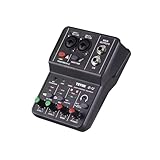 Best for Guitar and Bass TAVOSOP Q-12: 16-bit/48kHz recording, XLR and 3.5mm mic inputs, gain halo meter Check price on Amazon
 Dual XLR Bundle MAONO E2 Gen2: Dual XLR input in a podcast equipment bundle with a mixer Check price on Amazon
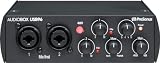 Anniversary Edition PreSonus AudioBox 96: USB audio interface in a 25th Anniversary edition Check price on Amazon
Our desk picks
| # | Product | Office Score | Buy |
|---|---|---|---|
| 1 | Artesia A22XT | 9.6/10 | Buy on Amazon |
| 2 | MAONO E2 Gen2 Mixer | 9.6/10 | Buy on Amazon |
| 3 | PreSonus AudioBox 96 | 9.5/10 | Buy on Amazon |
| 4 | TAVOSOP Q-12 | 9.4/10 | Buy on Amazon |

Artesia A22XT
A 24-bit/96kHz interface with XLR and 1/4 in TRS inputs, 48V phantom power and real-time monitoring for a microphone and instrument setup.
Pros
- 24-bit/96kHz recording is the highest resolution stated here
- XLR and 1/4 in TRS inputs cover microphones and instruments
- 48V phantom power supports condenser microphones
- Real-time monitoring keeps playback in sync while recording
Cons
- Heavier than the TAVOSOP at 1.77 lb against 0.68 lb
- Larger footprint at 6.84 x 4.26 x 1.77 in
- Only one XLR input for a two-microphone setup
- One-year warranty term
Detailed Review
Artesia lists the A22XT as a 24-bit/96kHz interface with XLR and 1/4 in TRS inputs, 48V phantom power for condenser microphones, plug and play connection by USB to a PC or Mac, and real-time monitoring with ultra-low latency. The maker states a 1-year warranty with a 24/7 US-based support team, and lists item weight at 1.77 lb with dimensions of 6.84 x 4.26 x 1.77 in.
Who it's for: a producer recording vocals and instruments through one interface with a higher stated resolution and a TRS input for instruments. Who should skip it: a buyer who wants two XLR inputs, a lighter box, or a longer warranty term.
Its Office Score of 9.6/10 comes from performance 32/35, build 21/25, value 21/25, safety 0/10 and warranty 2/5: 76 of 100 points, placed on our 9.2 to 9.8 scale.
Key Specifications
| Recording resolution | 24-bit/96kHz |
|---|---|
| Inputs | XLR, 1/4 in TRS |
| Phantom power | 48V |
| Product dimensions | 6.84 x 4.26 x 1.77 in |
These specs mirror the retailer listing as of 20 November 2026; performance figures are stated by the brand.
Safety and Warranty
What this listing states. No volume limit or safety listing is stated, so safety scores zero. 1-year warranty. It does not say everything a buyer needs, such as who pays return shipping, so warranty scores 2 of 5. See How We Pick.
Protect your hearing. Keep volume moderate during long calls, take breaks, and treat noise cancelling and battery figures as the maker's claims.
This is general buying information, not professional advice. Follow each product manual and local rules, and see our Safety Disclaimer.

MAONO E2 Gen2 Mixer
An all-in-one podcast bundle with two XLR combo inputs, 60dB gain preamps, loopback, Bluetooth and eight custom sound effects.
Pros
- Two XLR combo inputs with 60dB gain preamps
- Loopback for live streaming with one computer
- Eight custom sound effects with up to 20 seconds each
- Built-in 1500mA battery with up to 8 hours of use
Cons
- 1-year warranty is shorter than the 3-year term here
- Does not support phone charging or power delivery
- 9.64 by 6.18 inch size needs desk space
- Heavier than the Vocaster at 1.83 pounds
Detailed Review
The maker lists a podcast equipment bundle with two XLR combo inputs and preamps offering up to 60dB of gain, loopback, Bluetooth, and USB-C and 3.5mm ports. It has eight custom sound effect buttons with up to 20 seconds of recording each, six preset reverbs, pitch-changing effects, a one-touch mute button and a monitoring button. The built-in 1500mA battery offers up to 8 hours of use, and the package includes the interface, a USB cable, a 3.5mm audio cable and a user manual. A 1-year warranty is stated.
Who it's for: podcasters who want a bundle with sound effects, reverb and loopback for live streaming. Who should skip it: anyone who wants a simple two-mic interface with a longer warranty.
Its Office Score of 9.6/10 comes from performance 32/35, build 21/25, value 21/25, safety 3/10 and warranty 2/5: 79 of 100 points, placed on our 9.2 to 9.8 scale.
Key Specifications
| Inputs | 2 XLR combo |
|---|---|
| Gain | 60dB |
| Battery | 1500mA, up to 8 hours |
| Warranty | 1 year |
These specs mirror the retailer listing as of 18 November 2026; performance figures are stated by the brand.
Safety and Warranty
What this listing states. One-touch mute button stated, so safety scores 3 of 10. A 1-year warranty is stated. It does not say everything a buyer needs, such as who pays return shipping, so warranty scores 2 of 5. See How We Pick.
Protect your hearing. Keep volume moderate during long calls, take breaks, and treat noise cancelling and battery figures as the maker's claims.
This is general buying information, not professional advice. Follow each product manual and local rules, and see our Safety Disclaimer.
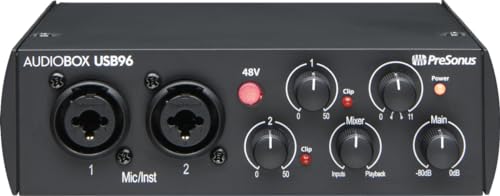
PreSonus AudioBox 96
A 2-channel USB 2.0 interface with two Class-A mic preamps, instrument inputs, MIDI I/O and 24-bit/96kHz converters.
Pros
- Two Class-A mic preamps plus two high-headroom instrument inputs
- MIDI I/O for keyboards and other MIDI gear
- 24-bit/96kHz converters with zero-latency monitoring
- Includes Studio One Artist, Ableton Live Lite and the Studio Magic suite
Cons
- USB 2.0, not USB-C
- 2.01 lb, heavier than the Yamaha
- 96kHz top sample rate, below the 192kHz picks
- 1-year warranty, while the COOLSELL states a lifetime warranty
Detailed Review
PreSonus lists the AudioBox 96 as a 2-channel USB 2.0 interface for personal and portable recording, with two Class-A mic preamps, two high-headroom instrument inputs for guitar, bass and line-level devices, and MIDI I/O. Studio-grade converters allow up to 24-bit/96kHz recording and playback, and mixer control blends inputs and playback for zero-latency monitoring. It runs on USB bus power with no separate supply, and has a high-powered headphone output, balanced 1/4-inch TRS outputs and onboard plus48V phantom power. Studio One Artist, Ableton Live Lite and the Studio Magic plug-in suite are included. It measures 5.5 by 5.5 by 1.75 in, weighs 2.01 lb, and carries a 1 year manufacturer warranty.
Who it's for: a home recorder who wants two mic preamps, MIDI and bundled software in one box. Who should skip it: anyone who needs USB-C or more than two channels.
Its Office Score of 9.5/10 comes from performance 30/35, build 21/25, value 21/25, safety 4/10 and warranty 2/5: 78 of 100 points, placed on our 9.2 to 9.8 scale.
Key Specifications
| Channels | 2 |
|---|---|
| Sample rate | 24-bit/96kHz |
| MIDI | MIDI I/O |
| Weight | 2.01 lb |
These specs mirror the retailer listing as of 18 November 2026; performance figures are stated by the brand.
Safety and Warranty
What this listing states. Onboard plus48V phantom power and mixer control for zero-latency monitoring, so safety scores 4 of 10. 1 year manufacturer warranty. It does not say everything a buyer needs, such as who pays return shipping, so warranty scores 2 of 5. See How We Pick.
Protect your hearing. Keep volume moderate during long calls, take breaks, and treat noise cancelling and battery figures as the maker's claims.
This is general buying information, not professional advice. Follow each product manual and local rules, and see our Safety Disclaimer.
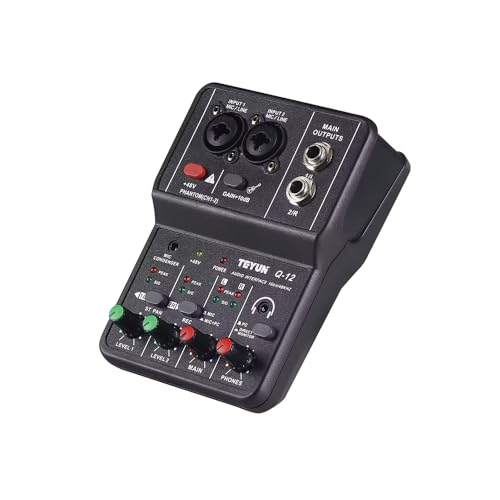
TAVOSOP Q-12
A compact 16-bit/48kHz interface with XLR and 3.5mm mic inputs, 48V phantom power, a gain halo meter and independent volume controls.
Pros
- Gain halo meter flags volume that runs too high
- Each channel has its own independent volume control
- Line 1/2 stereo output switches to mono
- Lightest pick here at 0.68 lb
Cons
- 16-bit/48kHz recording is the lower resolution stated here
- Second microphone input is a 3.5mm jack, not a second XLR
- Per-channel volume and mono switching add controls a simple setup does not need
- One-year warranty term
Detailed Review
TAVOSOP lists the Q-12 as a 16-bit/48kHz interface with an XLR input, a 3.5mm microphone jack, 48V phantom power, a gain halo meter and independent volume control for each channel, with Line 1/2 stereo output switchable to mono and support for guitar or bass insertion. The maker states a one-year warranty, lists item weight at 0.68 lb and dimensions of 5.99 x 4.92 x 1.97 in, and describes plug and play connection with ultra-low latency.
Who it's for: a producer who records guitar or bass alongside a microphone and wants per-channel volume control in a small, light box. Who should skip it: a buyer who needs 24-bit recording, a second XLR input, or a 1/4 in TRS input.
Its Office Score of 9.4/10 comes from performance 29/35, build 20/25, value 20/25, safety 0/10 and warranty 0/5: 69 of 100 points, placed on our 9.2 to 9.8 scale.
Key Specifications
| Recording resolution | 16-bit/48kHz |
|---|---|
| Inputs | XLR, 3.5mm mic jack |
| Phantom power | 48V |
| Product dimensions | 5.99 x 4.92 x 1.97 in |
These specs mirror the retailer listing as of 20 November 2026; performance figures are stated by the brand.
Safety and Warranty
What this listing states. No volume limit or safety listing is stated, so safety scores zero. No warranty term, so warranty scores zero. See How We Pick.
Protect your hearing. Keep volume moderate during long calls, take breaks, and treat noise cancelling and battery figures as the maker's claims.
This is general buying information, not professional advice. Follow each product manual and local rules, and see our Safety Disclaimer.
As an Amazon Associate I earn from qualifying purchases.
Specs compared
| Interface | Office Score | Recording resolution | Inputs | Phantom power | Item weight | Warranty | Amazon |
|---|---|---|---|---|---|---|---|
| Artesia A22XT | 9.6/10 | 24-bit/96kHz | XLR, 1/4 in TRS | 48V | 1.77 lb | 1 year | View on Amazon |
| TAVOSOP Q-12 | 9.4/10 | 16-bit/48kHz | XLR, 3.5mm mic | 48V | 0.68 lb | 1 year | View on Amazon |
| MAONO E2 Gen2 | 9.6/10 | Not stated | Dual XLR | Not stated | Not stated | Not stated | |
| PreSonus AudioBox 96 | 9.5/10 | Not stated | Not stated | Not stated | Not stated | Not stated | View on Amazon |
All numbers are the manufacturer’s stated specs, not measured in an office, pulled on 20 November 2026. Two of the four state a warranty term of one year; none state a safety certification.
How to choose the best audio interface for electronic music production
Start with recording resolution
Recording resolution is the first figure to compare, and it is the one that separates the two interfaces with stated resolutions here. The Artesia A22XT states 24-bit/96kHz recording, while the TAVOSOP Q-12 states 16-bit/48kHz. The higher stated figure suits a producer who plans to shape a vocal or a synth line after the take, while the lower figure still covers a straightforward recording setup. The MAONO and the PreSonus name no resolution, so they cannot be ranked on this point. A producer who only records a single synth line may never notice the gap, while a producer layering vocals over dense arrangements will. For mix work after the take, see our best audio interface for mixing and mastering guide.
Match the inputs to the instruments
Count the sources before counting the inputs. The Artesia pairs an XLR input with a 1/4 in TRS input, so a microphone and an instrument can share one box, and its 48V phantom power supports condenser microphones. The TAVOSOP pairs an XLR input with a 3.5mm microphone jack, supports guitar or bass insertion, and adds a gain halo meter with independent volume control for each channel. The MAONO names dual XLR input in a mixer bundle, which suits a two-microphone desk. The TAVOSOP also gives each channel its own volume control, so a microphone and a guitar can be balanced without touching the computer. A buyer who records synths should check the input list first: the Artesia and the TAVOSOP name their inputs, while the PreSonus names none. Headphones made for interface use help with listening back; see our best headphones for audio interface picks.
Check the footprint before it lands on the desk
An interface lives on the desk next to the keyboard and the monitor, so its footprint matters as much as its inputs. The TAVOSOP is the lighter of the two that state item weight, at 0.68 lb against 1.77 lb, and its longest side measures 5.99 in against the Artesia at 6.84 in. The MAONO and the PreSonus name no dimensions, so their footprint cannot be compared here. Measure the clear space beside the computer before ordering, and leave room for the cables that run to the microphone and the monitors.
| Interface | Dimensions | Item weight |
|---|---|---|
| Artesia A22XT | 6.84 x 4.26 x 1.77 in | 1.77 lb |
| TAVOSOP Q-12 | 5.99 x 4.92 x 1.97 in | 0.68 lb |
| MAONO E2 Gen2 | Not stated | Not stated |
| PreSonus AudioBox 96 | Not stated | Not stated |
Figures as stated in each listing. Dimensions are the box size; item weight is the unit alone.
Mind the monitoring and the gain
Monitoring and gain decide whether a take is usable. The Artesia states real-time monitoring with ultra-low latency, so playback stays in sync while recording. The TAVOSOP states ultra-low latency plug and play connection, a gain halo meter whose red light flashes when volume runs too high, and independent volume control for each channel, with Line 1/2 stereo output switchable to mono. Watch the meter while playing, since the red light flags a signal that runs too high. Set the gain with the meter in view, so a hot signal is caught before the take is lost.
Read the warranty line
Only two of the four state a warranty term. The TAVOSOP and the Artesia each state one year; the Artesia adds a 24/7 US-based support team and describes its warranty as comprehensive. The MAONO and the PreSonus state no warranty term. A one-year term is short, so check what it covers before ordering, and keep the order confirmation with the box.
FAQ
What recording resolution do these interfaces offer?
The Artesia A22XT states 24-bit/96kHz recording and the TAVOSOP Q-12 states 16-bit/48kHz. The MAONO and the PreSonus name no recording resolution.
Which interface has XLR and instrument inputs?
The Artesia pairs an XLR input with a 1/4 in TRS input for microphones and instruments, and the TAVOSOP pairs an XLR input with a 3.5mm microphone jack and supports guitar or bass insertion. The MAONO names dual XLR input.
Do these interfaces include 48V phantom power?
The TAVOSOP and the Artesia each state 48V phantom power for condenser microphones. The MAONO and the PreSonus name no phantom power.
Which interface is the lightest?
Of the two that state item weight, the TAVOSOP at 0.68 lb is lighter than the Artesia at 1.77 lb. The MAONO and the PreSonus state no item weight.
What warranty term do these interfaces state?
The TAVOSOP and the Artesia each state a one-year warranty. The MAONO and the PreSonus state no warranty term.
Score breakdown
The Office Score weighs performance (recording resolution, inputs, phantom power and monitoring), build (size and item weight), value for the stated specs, safety and warranty. For an audio interface, safety means a stated safety certification or safety-relevant feature; none of the four state one. Two listings state a warranty term: the TAVOSOP and the Artesia each state one year. How we pick explains the weights.
| Product | Office Score | Perf. /35 | Build /25 | Value /25 | Safety /10 | Warranty /5 |
|---|---|---|---|---|---|---|
| Artesia A22XT | 9.6 | 32 | 21 | 21 | 0 | 2 |
| TAVOSOP Q-12 | 9.4 | 29 | 20 | 20 | 0 | 0 |
We fit point totals onto a 9.2 low and 9.8 high in a straight line. One item can outscore another only by earning more points.
More for your workspace
See every audio, power and connectivity guide.
More picks: headsets, computer speakers, docking stations and USB hubs.